
Protecting the backbone of clean energy
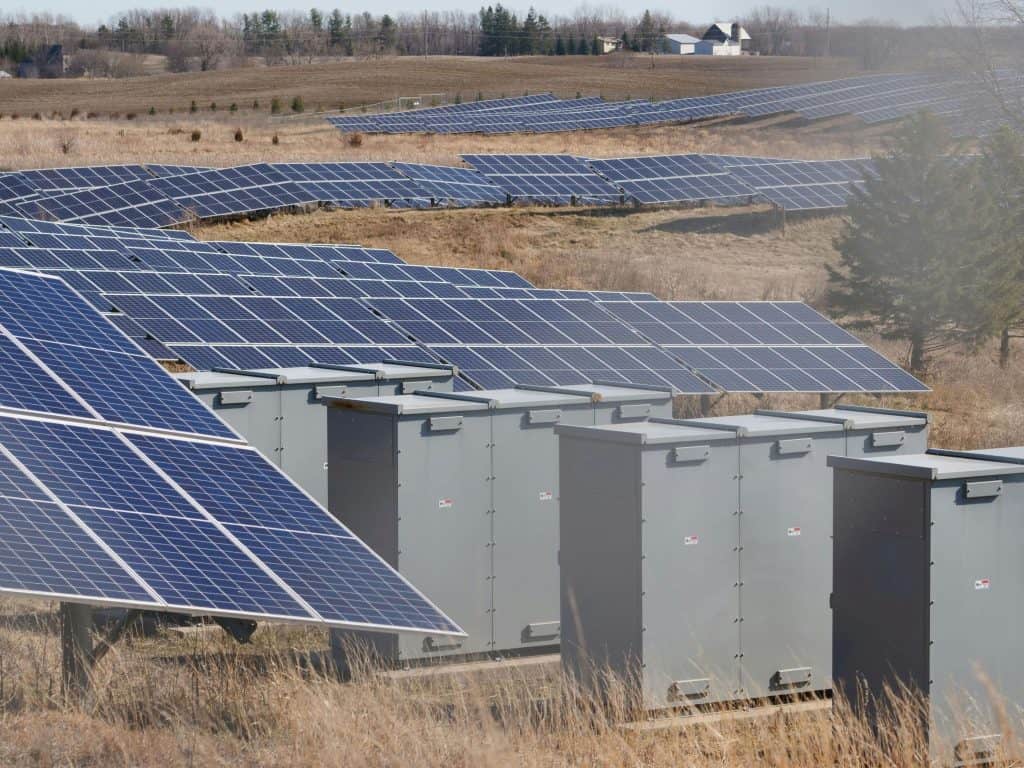
Protection technology ensures safe, reliable battery storage for renewables

In the UK, the share of electricity generation from renewable sources during the second quarter of 2025 reached a new record level of 54.5 per cent of all generation, according to the Department for Energy Security and Net Zero. But as we shift closer to a net-zero energy system, it becomes critical to have a robust storage solution to harness the energy we produce. Here, Mike Torbitt, managing director of Cressall, explores the technology behind battery energy storage systems (BESS).


The Government’s Clean Power 2030 Action Plan, introduced in December 2024, looks to ensure that clean sources produce “at least as much power as Great Britain consumes in total” and “at least 95 per cent of Great Britain’s generation”. Achieving this will rely on a blend of offshore wind and solar energy deployed at scale.

But this transformation hinges on flexibility. As wind and solar dominate, BESS is becoming the backbone of grid stability, absorbing excess renewable energy and releasing it during demand peaks. Lithium-ion technology leads the way here, comprising 95 per cent of UK BESS projects, thanks to its rapid response and scalability.

The BESS landscape

Higher renewable penetration has driven demand for energy storage. As of September 2025, RenewableUK reports 1,943 active battery storage projects in the UK, with 6.8 gigawatts (GW) of operational capacity — a 509 per cent increase since 2020.

Even larger projects are underway. Tillbridge Solar in Lincolnshire will deliver 1.5 GW of solar PV and three GWh of BESS, while Pembroke Battery in Wales will become the UK’s largest storage facility when construction begins in early 2026.

These assets will provide fast frequency response, peak shaving and renewable firming. Their success, however, depends on safe, reliable integration into medium-voltage (MV) grids. Systems typically connect at 6–36 kV, where grid code compliance, fault studies and earthing design are critical. Without robust protection, the promise of storage could falter under grid physics.

MV challenges

MV grids are faultenergy rich environments. In solidly earthed MV systems, a singlelinetoground fault can drive very high currents, imposing severe thermal and mechanical stress on stepup transformers, converter valves and switchgear. 

For BESS, rapid dispatch and high-power flows amplify risks such as inrush currents, transient overvoltages and earth faults escalating in milliseconds, posing compliance and protection challenges under the GB Grid Code. Without controlled earthing, fault magnitudes can exceed clearing times and equipment limits, risking outages and costly repairs.

As grids add high voltage direct current (HVDC) links to ferry offshore wind and remote solar, and as BESS ties into converter stations or MV collectors, abnormal conditions like DC faults reflected into AC neutrals demand predictable neutral behaviour. Limiting ground fault current is essential to maintain converter transformer integrity and prevent cascading trips.

Making BESS safe

This is where neutral earthing resistors (NERs) do the quiet, but crucial work. By inserting a defined resistance between the transformer neutral and earth, an NER limits earth fault current to a level that protection relays can detect and clear selectively, without tripping the entire plant.

NERs prevent transformer insulation damage, reduce arc flash hazards, minimise voltage stress on equipment, enable controlled fault detection and isolation and maintain system stability during fault conditions. Cressall supplies NERs tailored for MV and HV duty in renewables and storage, with engineering guidance that highlights how DC and AC NERs protect converter transformers and maintain system integrity during abnormal events — requirements that map directly to MVconnected BESS. 

Every Cressall NER is designed to IEC and IEEE standards, factory tested under fault current conditions and built with stainless steel elements for outdoor durability. They are rated for continuous operation in harsh environments, ensuring reliability in demanding renewable installations.

In practice, this means fewer catastrophic stresses on transformer windings and converter components, better adherence to grid code protection settings and smoother interconnection approvals. 

The UK is reshaping its energy system, but success depends on more than megawatt-hours. Behind every project is a layer of protection technology that keeps the grid stable. As the UK races toward Clean Power 2030, NERs are foundational, turning unpredictable faults into manageable events, making MV-connected BESS bankable and resilient.

To learn more about Cressall’s NERs for BESS applications, please visit the website

CRE791
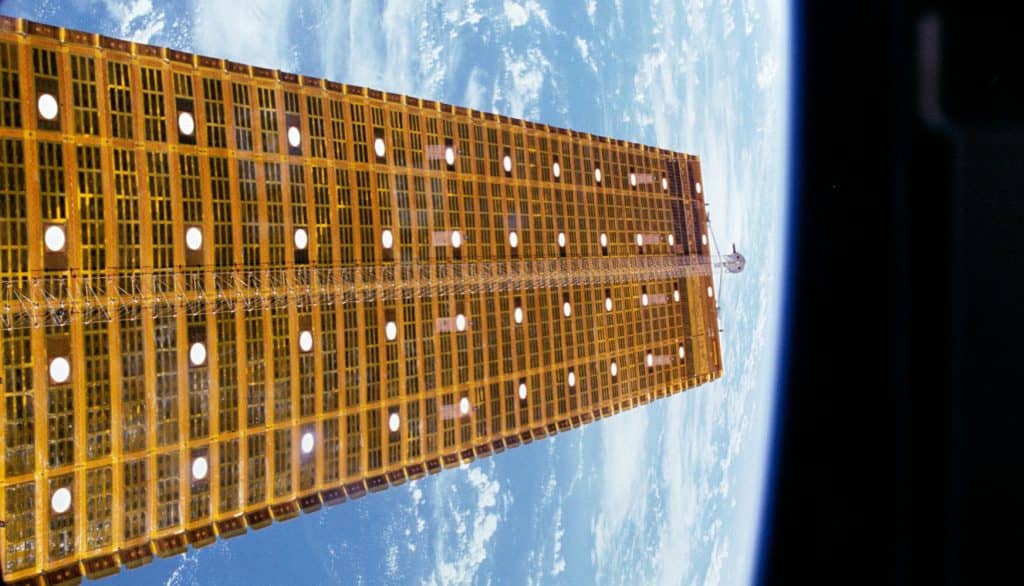
Solar panels in space: The future of renewable energy

solar panels in outer space

Resistor technology will play a crucial role in space-based solar power

In the first study of its kind, researchers at King’s College London have discovered that space-based solar power (SBSP) could cut Europe’s renewable energy requirements by up to 80 per cent. Here Mike Torbitt, Managing Director of resistor manufacturer Cressall, discusses what this means for the future of renewable energy, and the role resistor technology will play in making these developments possible.

From analysing NASA designs, researchers at King’s found that SBSP had the potential to reduce energy battery storage needs by over two thirds.


The feasibility of solar panels in space is still yet to be determined; there are significant technical and cost limitations to overcome first. However, it is hoped that it could become possible by 2050. If successful, it would be a giant leap towards international net-zero efforts.

NASA’s concepts, involving satellites in geostationary orbit, would allow for a continuous harvesting of sunlight that could then be beamed to Europe as microwaves. The result would be dispatchable, zero-carbon power that is unaffected by varying weather conditions.

The advantages are clear, but the challenge, of course, is navigating the technical complexities and initial investment required to complete such an ambitious project.

As highlighted by NASA, SBSP would likely exceed anything built in space before in terms of scale, other than maybe very large satellite constellations with huge combined mass and area. So, it is by no means a given that the current concepts are achievable.

Requirements for resistor technology in solar power

Resistors are vital for controlling the flow of current to make sure each electronic component receives the right level of voltage. By dissipating excess energy, they can prevent systems from overloading and overheating.

For land-based solar panels, resistors are also used for braking to ensure panels that move or tilt towards the sun stop when required.

While there will be overlaps in resistor functions in land- and space-based solar panels, SBSP will require advanced resistor technology that is both reliable and durable in space.

A major challenge will be during the launch, when resistors need to regulate electronic systems while withstanding extreme vibrations and thrust.

Resistor technology will also be needed for the testing of SBSP designs through load banks. These allow engineers to test how electronic systems will handle different conditions, to ensure faults are identified and resolved before the launch. For such projects, thorough testing is absolutely essential.

Designing resistors with resilience to extreme conditions

Resistors within the electronic systems will require highly specialised designs to make sure they can effectively withstand the harsh conditions of space.

With increased radiation and extreme variations in temperature and pressure, the conditions of space present unique challenges to engineers. Every aspect of the design, from the overall structure to the smaller details like resistors, must be carefully considered, with optimal materials used throughout.

A challenge for engineers is designing resistors that can handle the vibrations during launch and remain durable in space, while being lightweight and compact.

Combined with this, each component must have sufficient radiation resistance to withstand the sun’s ionising effects. As such, engineers will generally need to focus on materials that are lightweight with high melting points.

Navigating the cost of SBSP

Alongside the technical complexities, cost is another factor that has held back developments in SBSP. The potential savings are huge once solar panels are successfully implemented in space, but the design, development and launch of the spacecraft will involve significant costs.

As the weight of spacecraft impacts the launch costs, all components, including resistors, will need to be as small and lightweight as possible. This needs to be achieved while ensuring all power demands are met, which is no easy feat for such a complex project.

Operating in space raises the stakes for any application, and so there will be a pressure to keep all electronic faults to a minimum to avoid project failure. Again, this is why load bank testing is so important in the development process.

By reducing the need for land-based renewables in the continent, space-based technology has the potential to reshape the energy landscape once fully implemented. In fact, researchers at King’s predict that SBSP could lead to savings of up to 15 per cent of costs in Europe, equivalent to €35.9 billion per year.

Considering the potential advantages of SBSP, it would be an incredibly exciting development for the renewable sector.

On a large scale, it has the potential to boost Europe’s efforts to achieve net zero, but the advantages extend beyond that. As engineers work to overcome the complex technical challenges of SBSP, we can expect to see advancements in just about every aspect of the electronic designs, and resistor technology is no exception.

To find out more about the role of resistors in renewable energy generation, speak to Cressall’s experts.

CRE790