The silent guardian

How resistors protect data centres from electrical stress

The data centre market is booming thanks to AI. According to Goldman Sachs, the explosion in generative AI means demand for data could increase 50 per cent by 2027 and by as much as 165 per cent by the end of the decade compared to 2023’s figures. It’s clear data centres are fast becoming another lifeblood utility in modern society, but what would happen if one suddenly switched off? Here, Mike Torbitt, Cressall‘s managing director, theorises just how much our world will rely on data centres in the future — and how to ensure their reliability.


Just as water, electricity and internet access have become utilities essential to modern life, information itself — stored, processed and delivered via data centres — is emerging as another utility of the digital age.

Goldman Sachs estimates that current power usage by the global data centre market sits at around 55 gigawatts (GW) and is comprised of cloud computing workloads and traditional workloads for typical business functions such as email or storage and AI.

Currently, the analyst estimates AI makes up roughly 14 per cent of this 55 GW capacity. However, when modelling future demand for these workload types, its analysts predict data centre power demand could reach 84 GW by 2027 with AI growing to 27 per cent of the overall market.

Of course, this is just one of many predictions and the crystal ball is present during any discourse on AI’s future. What appears definite though, is that the technology is transforming the way we consume information and thus the capacity of data centres.

Lights off

So, what would happen if a data centre suddenly lost power? The effects could ripple far beyond disrupted websites. Online banking, medical diagnostics, AI-powered logistics and smart energy infrastructure are just some of the many applications that rely on a continuous flow of information being processed and stored in these facilities.

For AI-specific workloads, the risks are particularly acute. Training large-scale models involves thousands of simultaneous graphics processing and tensor processing unit operations that can run for days or weeks. If power is lost mid-process and checkpointing isn’t frequent or robust, entire training runs may be corrupted or lost. Inference systems that run in real-time such as recommendation engines, chatbots or fraud detection tools can stall instantly, causing service degradation or outright failure.

Data integrity is another issue. Many applications run on distributed databases that rely on synchronous replication and consensus mechanisms. If nodes in different racks or zones go down at slightly different times, it can cause data inconsistency or split-brain scenarios, where systems disagree on the current state of data.

While most modern data centres are equipped with uninterruptible power supplies (UPS) and backup generators, a delay in switching over to backup power, a failed UPS battery bank or insufficient fuel reserves in a prolonged grid failure can all lead to downtime.

Powering resilience

As data centre workloads become more complex and the stakes of downtime more severe, electrical reliability becomes a critical point of failure and therefore, a primary design consideration. This is where passive components like resistors play a role in ensuring stable, resilient operations.

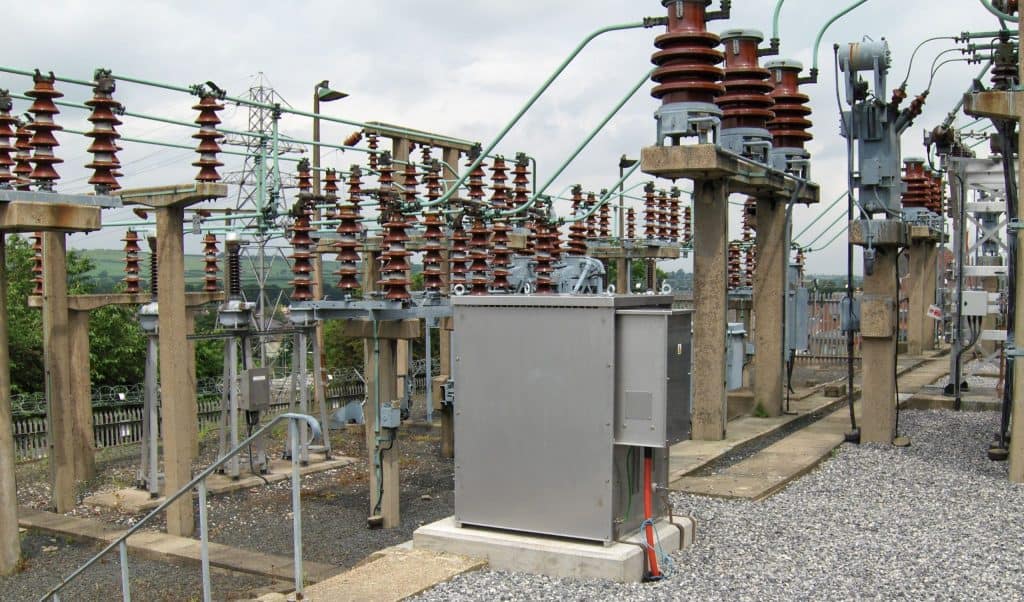
Resistor technologies such as neutral earthing resistors (NERs) are essential to protecting infrastructure and maintaining uptime. NERs are deployed to limit fault current during earth faults, preventing damage to expensive components like transformers and switchgear. In the event of a ground fault, an NER ensures the fault current is safely controlled and isolated, allowing the rest of the data centre to remain operational while the fault is addressed.

Load banks, on the other hand, are used to test and validate backup power systems by simulating real electrical loads under controlled conditions. They allow operators to verify that backup systems can deliver the required power reliably during an actual outage, without the risk of affecting live data centre operations.

Routine load bank testing can uncover issues such as fuel delivery problems, battery degradation or improper load sharing between generators — all of which might otherwise remain hidden until an emergency strikes. By identifying and correcting these issues in advance, load banks support predictive maintenance, regulatory compliance and, ultimately, system resilience.

Making the choice

Of course, not all resistor solutions are created equal. As data centres scale, operators must consider variables such as fault current levels, system voltage, spatial constraints, cooling requirements and compliance with international standards.

Selecting the appropriate NER with the correct resistance value and time rating, how long the resistor can safely carry fault current before its temperature exceeds safe operating limits, is critical for effective fault current limitation without interrupting service. Likewise, load banks must be sized to reflect real-world power demands and designed for integration with both generator and UPS systems.

Custom engineering plays a significant role in aligning these technologies with the architecture of each facility. Modular data centres, hyperscale environments and edge computing sites each present unique demands — from space and airflow limitations to maintenance accessibility. Working with experienced resistor manufacturers, like Cressall, ensures that resilience is built into the system from the ground up, not added as an afterthought.
In a digital economy that’s becoming increasingly dependent on uninterrupted data flow, choosing the right components to ensure reliability matters. As the utility of the modern world, the cost of downtime in data centres is only going to rise as our implementation of AI technologies increases. Building safety nets into systems is therefore critical and, while resistors may not be the first component that springs to mind, their role in data centre uptime has never been more important.

Learn more about Cressall’s range of resistor technologies by visiting the website

CRE789


Grid-ready data centres

Data center protection

How high-resistance grounding keeps data centres online

In December 2025, the UK’s National Energy System Operator (NESO) announced the results of its major overhaul of the UK’s grid connection process, removing speculative schemes and introducing a readiness-based system. While this affects all electricity projects, it raises the bar for data centres, which must now demonstrate gridfriendly behaviour from day one. Here, Mike Torbitt, managing director of resistor manufacturer Cressall Resistors, explains how neutral earthing resistors (NERs) support resilient, grid compatible operation.


Data centres have been recognised as Critical National Infrastructure (CNI) since September 2024, placing them on “an equal footing with water, energy and emergency services systems”. While this recognition is invaluable to scaling capacity, NESO’s reforms add a new layer of complexity.

The Connections Reform context

Under the Connections Reform, NESO now prioritises “first ready and needed,” replacing the former firstcome, firstserved approach. Many transmission-connected demand projects – including data centres – have been placed into firm capacity blocks with connection dates extending to 2035, reflecting a more realistic delivery timeline than the prior ambition to connect the full pipeline by 2030. In this context, fault management and predictable, grid friendly operation become prerequisites for connection.

The readiness framework is evidence based. To secure a firm offer, developers must prove deliverability and true grid readiness — not just on paper, but through design maturity, risk controls and credible delivery plans. A robust power and protection strategy is therefore critical, showing the facility will behave predictably during network disturbances and will not trigger unnecessary disconnections.

What is high-resistance grounding?

One mechanism central to grid friendly design is highresistance earthing, also known as highresistance grounding (HRG). Although industry benchmarking shows overall outages are declining, Uptime Institute data indicates power remains the leading cause of impactful incidents when failures do occur, cited by 54 per cent of operators surveyed would be more accurate to the Uptime Institute’s methodology.

In HRG systems, the transformer or generator neutral is connected to earth through a high value resistor. By introducing resistance, HRG limits single line to earth fault current to a small, controlled value — typically a few amps at low voltage or tens to hundreds of amps at medium voltage. The outcome is that a first earth fault becomes an alarm only event rather than an immediate trip, enabling continued operation while teams quickly locate and clear the fault.

This approach avoids the drawbacks of other schemes. Unlike solid earthing, it prevents very high singlelinetoearth currents and the associated incident energy, and unlike ungrounded systems, it keeps the neutral referenced, suppressing transient overvoltages and making faults easier to locate. 

Proper HRG design sets the resistor so the permitted fault current is above the system’s capacitive charging current, yet low enough to reduce equipment stress and arc flash energy for single-line-to-earth faults. In data centres, this keeps the first earth fault ‘alarm only’, sustaining critical services while teams rapidly pinpoint the faulted feeder, avoiding nuisance trips across uninterruptible power supply and generator transitions and supporting gridfriendly operation in the highdensity, alwayson environment.

NER data center protection

The critical component

An NER is the enabling component of a HRG system because it connects the neutral point to earth through a precisely selected resistance. By setting the resistance value correctly, the NER establishes the single line to earth fault current and the associated thermal duty so that protection relays can reliably detect a first fault without forcing an immediate trip. This behaviour keeps the system stable during disturbances and allows operators to locate and clear faults while maintaining service continuity.

For data centres, NERs must be engineered to match real world constraints such as footprint, access routes for installation and maintenance, cooling and ventilation needs, and compliance with relevant international electrical standards. Cressall’s designs prioritise ease of maintenance, high thermal performance and long service life so that facilities can run continuously and recover predictably after fault events or tests.

Selecting the right resistor element is central to performance and cost. Edgewound coils are suited to higher currents, while grid and wire-wound elements serve other ratings efficiently. Cressall manufactures NERs across essentially any system voltage and initial fault current requirement, with rated durations ranging from a few seconds to continuous duty, so that specifications can align with the site’s protection guidelines and operational objectives.

Now that grid connections have been reprioritised, well‑specified NERs within HRG schemes make the first earth fault a managed, alarm‑only condition, keeping services online, demonstrating grid‑friendly behaviour and helping ensure data centre designs do not delay connection.

CRE734