Grid-ready data centres

Data center protection

How high-resistance grounding keeps data centres online

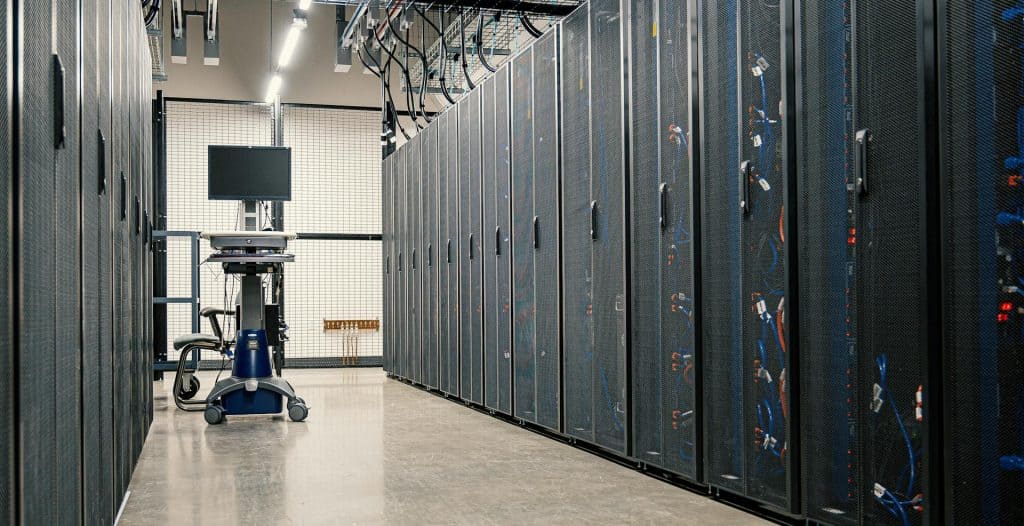
In December 2025, the UK’s National Energy System Operator (NESO) announced the results of its major overhaul of the UK’s grid connection process, removing speculative schemes and introducing a readiness-based system. While this affects all electricity projects, it raises the bar for data centres, which must now demonstrate gridfriendly behaviour from day one. Here, Mike Torbitt, managing director of resistor manufacturer Cressall Resistors, explains how neutral earthing resistors (NERs) support resilient, grid compatible operation.


Data centres have been recognised as Critical National Infrastructure (CNI) since September 2024, placing them on “an equal footing with water, energy and emergency services systems”. While this recognition is invaluable to scaling capacity, NESO’s reforms add a new layer of complexity.

The Connections Reform context

Under the Connections Reform, NESO now prioritises “first ready and needed,” replacing the former firstcome, firstserved approach. Many transmission-connected demand projects – including data centres – have been placed into firm capacity blocks with connection dates extending to 2035, reflecting a more realistic delivery timeline than the prior ambition to connect the full pipeline by 2030. In this context, fault management and predictable, grid friendly operation become prerequisites for connection.

The readiness framework is evidence based. To secure a firm offer, developers must prove deliverability and true grid readiness — not just on paper, but through design maturity, risk controls and credible delivery plans. A robust power and protection strategy is therefore critical, showing the facility will behave predictably during network disturbances and will not trigger unnecessary disconnections.

What is high-resistance grounding?

One mechanism central to grid friendly design is highresistance earthing, also known as highresistance grounding (HRG). Although industry benchmarking shows overall outages are declining, Uptime Institute data indicates power remains the leading cause of impactful incidents when failures do occur, cited by 54 per cent of operators surveyed would be more accurate to the Uptime Institute’s methodology.

In HRG systems, the transformer or generator neutral is connected to earth through a high value resistor. By introducing resistance, HRG limits single line to earth fault current to a small, controlled value — typically a few amps at low voltage or tens to hundreds of amps at medium voltage. The outcome is that a first earth fault becomes an alarm only event rather than an immediate trip, enabling continued operation while teams quickly locate and clear the fault.

This approach avoids the drawbacks of other schemes. Unlike solid earthing, it prevents very high singlelinetoearth currents and the associated incident energy, and unlike ungrounded systems, it keeps the neutral referenced, suppressing transient overvoltages and making faults easier to locate. 

Proper HRG design sets the resistor so the permitted fault current is above the system’s capacitive charging current, yet low enough to reduce equipment stress and arc flash energy for single-line-to-earth faults. In data centres, this keeps the first earth fault ‘alarm only’, sustaining critical services while teams rapidly pinpoint the faulted feeder, avoiding nuisance trips across uninterruptible power supply and generator transitions and supporting gridfriendly operation in the highdensity, alwayson environment.

NER data center protection

The critical component

An NER is the enabling component of a HRG system because it connects the neutral point to earth through a precisely selected resistance. By setting the resistance value correctly, the NER establishes the single line to earth fault current and the associated thermal duty so that protection relays can reliably detect a first fault without forcing an immediate trip. This behaviour keeps the system stable during disturbances and allows operators to locate and clear faults while maintaining service continuity.

For data centres, NERs must be engineered to match real world constraints such as footprint, access routes for installation and maintenance, cooling and ventilation needs, and compliance with relevant international electrical standards. Cressall’s designs prioritise ease of maintenance, high thermal performance and long service life so that facilities can run continuously and recover predictably after fault events or tests.

Selecting the right resistor element is central to performance and cost. Edgewound coils are suited to higher currents, while grid and wire-wound elements serve other ratings efficiently. Cressall manufactures NERs across essentially any system voltage and initial fault current requirement, with rated durations ranging from a few seconds to continuous duty, so that specifications can align with the site’s protection guidelines and operational objectives.

Now that grid connections have been reprioritised, well‑specified NERs within HRG schemes make the first earth fault a managed, alarm‑only condition, keeping services online, demonstrating grid‑friendly behaviour and helping ensure data centre designs do not delay connection.

CRE734


Protecting the backbone of clean energy

Protection technology ensures safe, reliable battery storage for renewables

In the UK, the share of electricity generation from renewable sources during the second quarter of 2025 reached a new record level of 54.5 per cent of all generation, according to the Department for Energy Security and Net Zero. But as we shift closer to a net-zero energy system, it becomes critical to have a robust storage solution to harness the energy we produce. Here, Mike Torbitt, managing director of Cressall, explores the technology behind battery energy storage systems (BESS).


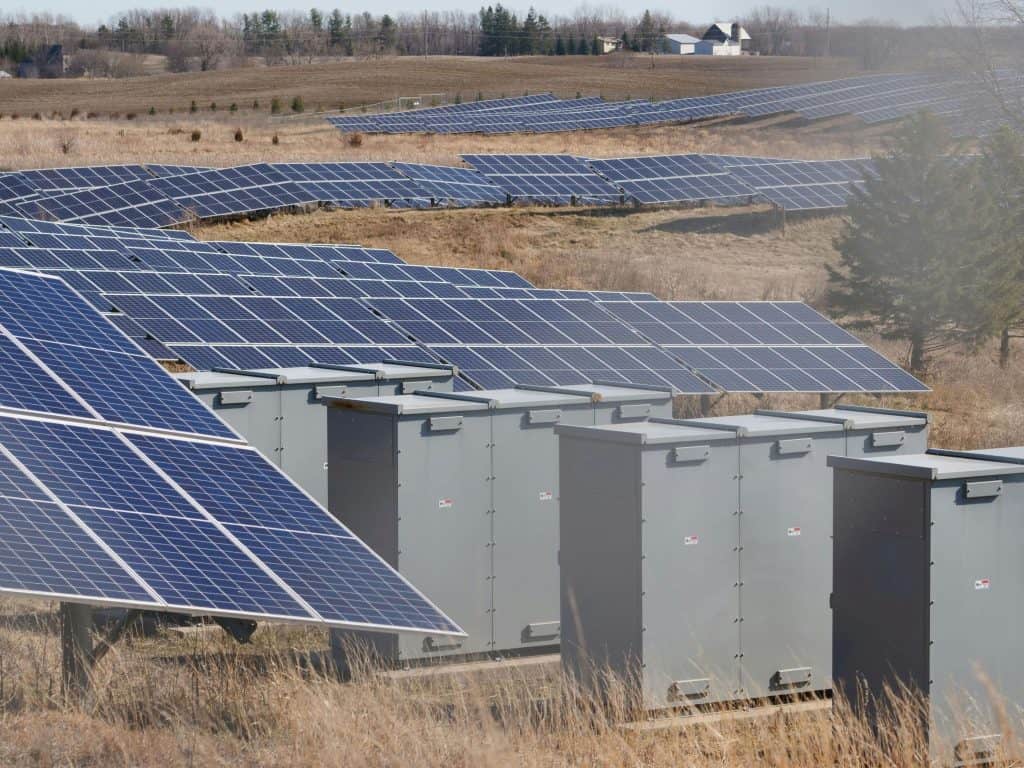
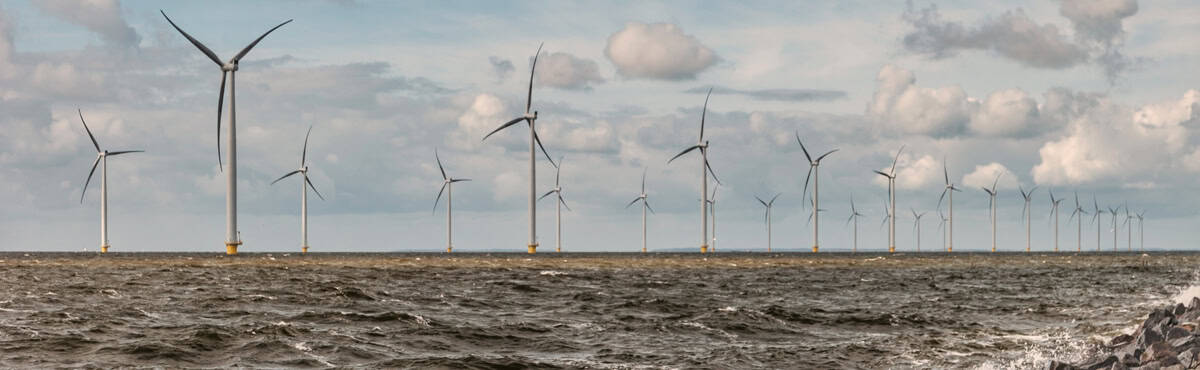
The Government’s Clean Power 2030 Action Plan, introduced in December 2024, looks to ensure that clean sources produce “at least as much power as Great Britain consumes in total” and “at least 95 per cent of Great Britain’s generation”. Achieving this will rely on a blend of offshore wind and solar energy deployed at scale.

But this transformation hinges on flexibility. As wind and solar dominate, BESS is becoming the backbone of grid stability, absorbing excess renewable energy and releasing it during demand peaks. Lithium-ion technology leads the way here, comprising 95 per cent of UK BESS projects, thanks to its rapid response and scalability.

The BESS landscape

Higher renewable penetration has driven demand for energy storage. As of September 2025, RenewableUK reports 1,943 active battery storage projects in the UK, with 6.8 gigawatts (GW) of operational capacity — a 509 per cent increase since 2020.

Even larger projects are underway. Tillbridge Solar in Lincolnshire will deliver 1.5 GW of solar PV and three GWh of BESS, while Pembroke Battery in Wales will become the UK’s largest storage facility when construction begins in early 2026.

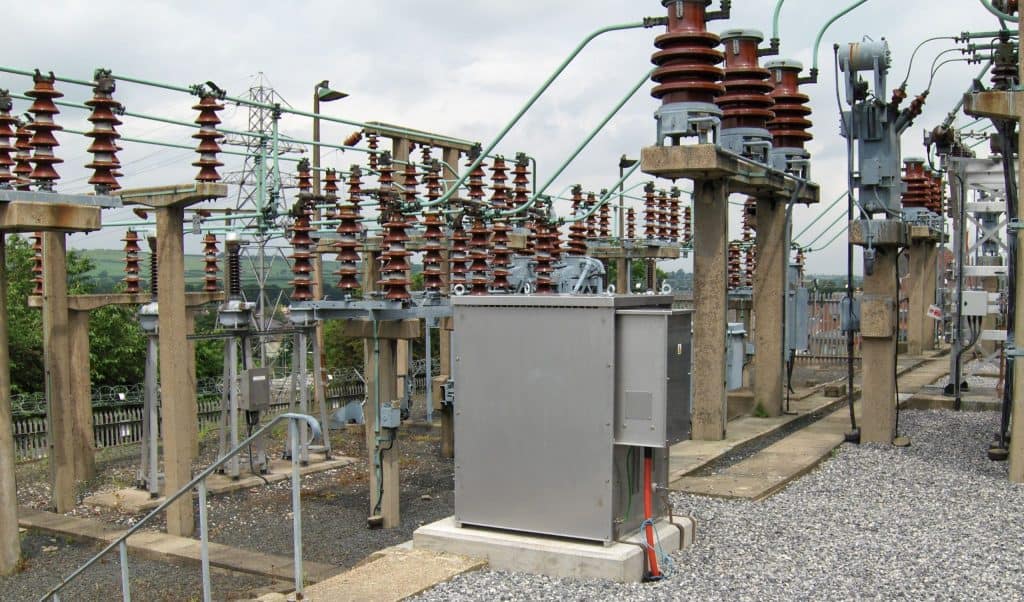
These assets will provide fast frequency response, peak shaving and renewable firming. Their success, however, depends on safe, reliable integration into medium-voltage (MV) grids. Systems typically connect at 6–36 kV, where grid code compliance, fault studies and earthing design are critical. Without robust protection, the promise of storage could falter under grid physics.

MV challenges

MV grids are faultenergy rich environments. In solidly earthed MV systems, a singlelinetoground fault can drive very high currents, imposing severe thermal and mechanical stress on stepup transformers, converter valves and switchgear. 

For BESS, rapid dispatch and high-power flows amplify risks such as inrush currents, transient overvoltages and earth faults escalating in milliseconds, posing compliance and protection challenges under the GB Grid Code. Without controlled earthing, fault magnitudes can exceed clearing times and equipment limits, risking outages and costly repairs.

As grids add high voltage direct current (HVDC) links to ferry offshore wind and remote solar, and as BESS ties into converter stations or MV collectors, abnormal conditions like DC faults reflected into AC neutrals demand predictable neutral behaviour. Limiting ground fault current is essential to maintain converter transformer integrity and prevent cascading trips.

Making BESS safe

This is where neutral earthing resistors (NERs) do the quiet, but crucial work. By inserting a defined resistance between the transformer neutral and earth, an NER limits earth fault current to a level that protection relays can detect and clear selectively, without tripping the entire plant.

NERs prevent transformer insulation damage, reduce arc flash hazards, minimise voltage stress on equipment, enable controlled fault detection and isolation and maintain system stability during fault conditions. Cressall supplies NERs tailored for MV and HV duty in renewables and storage, with engineering guidance that highlights how DC and AC NERs protect converter transformers and maintain system integrity during abnormal events — requirements that map directly to MVconnected BESS. 

Every Cressall NER is designed to IEC and IEEE standards, factory tested under fault current conditions and built with stainless steel elements for outdoor durability. They are rated for continuous operation in harsh environments, ensuring reliability in demanding renewable installations.

In practice, this means fewer catastrophic stresses on transformer windings and converter components, better adherence to grid code protection settings and smoother interconnection approvals. 

The UK is reshaping its energy system, but success depends on more than megawatt-hours. Behind every project is a layer of protection technology that keeps the grid stable. As the UK races toward Clean Power 2030, NERs are foundational, turning unpredictable faults into manageable events, making MV-connected BESS bankable and resilient.

To learn more about Cressall’s NERs for BESS applications, please visit the website

CRE791

Solar panels in space: The future of renewable energy

solar panels in outer space

Resistor technology will play a crucial role in space-based solar power

In the first study of its kind, researchers at King’s College London have discovered that space-based solar power (SBSP) could cut Europe’s renewable energy requirements by up to 80 per cent. Here Mike Torbitt, Managing Director of resistor manufacturer Cressall, discusses what this means for the future of renewable energy, and the role resistor technology will play in making these developments possible.

From analysing NASA designs, researchers at King’s found that SBSP had the potential to reduce energy battery storage needs by over two thirds.


The feasibility of solar panels in space is still yet to be determined; there are significant technical and cost limitations to overcome first. However, it is hoped that it could become possible by 2050. If successful, it would be a giant leap towards international net-zero efforts.

NASA’s concepts, involving satellites in geostationary orbit, would allow for a continuous harvesting of sunlight that could then be beamed to Europe as microwaves. The result would be dispatchable, zero-carbon power that is unaffected by varying weather conditions.

The advantages are clear, but the challenge, of course, is navigating the technical complexities and initial investment required to complete such an ambitious project.

As highlighted by NASA, SBSP would likely exceed anything built in space before in terms of scale, other than maybe very large satellite constellations with huge combined mass and area. So, it is by no means a given that the current concepts are achievable.

Requirements for resistor technology in solar power

Resistors are vital for controlling the flow of current to make sure each electronic component receives the right level of voltage. By dissipating excess energy, they can prevent systems from overloading and overheating.

For land-based solar panels, resistors are also used for braking to ensure panels that move or tilt towards the sun stop when required.

While there will be overlaps in resistor functions in land- and space-based solar panels, SBSP will require advanced resistor technology that is both reliable and durable in space.

A major challenge will be during the launch, when resistors need to regulate electronic systems while withstanding extreme vibrations and thrust.

Resistor technology will also be needed for the testing of SBSP designs through load banks. These allow engineers to test how electronic systems will handle different conditions, to ensure faults are identified and resolved before the launch. For such projects, thorough testing is absolutely essential.

Designing resistors with resilience to extreme conditions

Resistors within the electronic systems will require highly specialised designs to make sure they can effectively withstand the harsh conditions of space.

With increased radiation and extreme variations in temperature and pressure, the conditions of space present unique challenges to engineers. Every aspect of the design, from the overall structure to the smaller details like resistors, must be carefully considered, with optimal materials used throughout.

A challenge for engineers is designing resistors that can handle the vibrations during launch and remain durable in space, while being lightweight and compact.

Combined with this, each component must have sufficient radiation resistance to withstand the sun’s ionising effects. As such, engineers will generally need to focus on materials that are lightweight with high melting points.

Navigating the cost of SBSP

Alongside the technical complexities, cost is another factor that has held back developments in SBSP. The potential savings are huge once solar panels are successfully implemented in space, but the design, development and launch of the spacecraft will involve significant costs.

As the weight of spacecraft impacts the launch costs, all components, including resistors, will need to be as small and lightweight as possible. This needs to be achieved while ensuring all power demands are met, which is no easy feat for such a complex project.

Operating in space raises the stakes for any application, and so there will be a pressure to keep all electronic faults to a minimum to avoid project failure. Again, this is why load bank testing is so important in the development process.

By reducing the need for land-based renewables in the continent, space-based technology has the potential to reshape the energy landscape once fully implemented. In fact, researchers at King’s predict that SBSP could lead to savings of up to 15 per cent of costs in Europe, equivalent to €35.9 billion per year.

Considering the potential advantages of SBSP, it would be an incredibly exciting development for the renewable sector.

On a large scale, it has the potential to boost Europe’s efforts to achieve net zero, but the advantages extend beyond that. As engineers work to overcome the complex technical challenges of SBSP, we can expect to see advancements in just about every aspect of the electronic designs, and resistor technology is no exception.

To find out more about the role of resistors in renewable energy generation, speak to Cressall’s experts.

CRE790

Choosing a renewable project power partner

Four things to consider before beginning a project

The Association for Renewable Energy and Clean Technology (REA) predicts that the UK’s renewables sector will be worth £41 billion by 2035, providing significant growth opportunities for engineering companies. But they cannot succeed alone — green energy projects need partners and suppliers to ensure power reliability. In this article, Mike Torbitt, managing director of Cressall, offers advice on what to look for in a renewable project power partner.


Data from the 2024 report Green Skills Outlook, which surveyed 1,000 global business leaders, reveals that 93 per cent of respondents consider green skills to be important to their company’s operations and objectives. Yet, only half are planning to upskill their staff on these capabilities — opening a worryingly large green skills gap.

To effectively transition to a more sustainable economy, businesses should look to partner with organisations with the necessary green skills. The United Nations’ Sustainable Development Goals highlight the importance of partnerships to improve knowledge sharing, accelerate access to renewable technologies for the least developed countries and enhance progress measurements.

This need is particularly pronounced within the power sector, since renewable projects rely on intermittent power sources such as wind, solar and tidal. These energy sources are less predictable than fossil fuels, meaning they can cause issues with the grid if it cannot handle energy fluctuations. Therefore, entering a partnership with a supplier who understands these challenges is a must.

So, what markers should businesses look for in potential power partnerships to ensure their success?

Proven experience

For renewable projects, sector-specific experience is a must, especially in the case where the business themselves is new to green infrastructure projects.

Partnering with an experienced supplier allows companies to tap into their partner’s knowledge of the challenges and technical demands associated with renewable energy projects. Cressall has extensive experience in providing resistors for renewable infrastructure projects, including wind, solar, tidal and biomass. We also partner with multinational energy services companies such as GE Vernova to equip them with harmonic filter resistors for high-voltage direct current (HVDC) projects.

HVDC infrastructure contributes to the success of a range of offshore projects, enabling effective transmission between the grid and remote windfarms or tidal projects. However, when HVDC is converted back to alternating current (AC) at the local grid level, this results in harmonic distortion, which can lead to overheating and increased likelihood of equipment failure.

Cressall’s thorough understanding of HVDC transmission allows us to provide tailored harmonic filter resistors to mitigate this problem and increase the efficiency of energy transmission projects.

Durable components

Another key consideration when selecting a supplier for a green energy project is whether it can manufacture components that withstand harsh conditions.

As of February 2025, the UK has over 30 gigawatts (GW) of offshore wind either installed or committed. While offshore windfarms benefit from higher wind speeds and consistency in direction, the effects of harsh winds and saltwater can be damaging for the equipment.

Opting for a power partner that can produce durable components is beneficial for offshore developments. For example, resistors used in these kinds of projects can be manufactured from materials with a high chromium content, such as 316 grade stainless steel, which helps to create a protective layer against corrosion caused by saltwater.

Thorough quality assurance

Renewable energy equipment needs to perform reliably in challenging and changeable environments, underscoring the importance of thorough testing and quality assurance

When selecting a power partner, it’s worthwhile researching its quality control process. In the case of resistors, a range of specialist tests are used during product development to ensure dependable performance under real-world conditions.

Essential quality measures include thermovision testing, which help engineers to detect hotspots and assess overall thermal performance. Understanding thermal behaviour enables appropriate cooling selection, reducing the risk of thermal shock, lubricant degradation or component failure.

Vibration testing resistors for shock and seismic resistance is equally important. This is particularly relevant for offshore wind farms or grid-side equipment in earthquake-prone regions.

Custom engineering capabilities

The benefit of partnering with a supplier that offers custom solutions is that they can be tailored to the specific challenge that they are facing.

Although resistors are a well-developed, mature technology, custom design allows proven techniques to be applied for new problems. Custom resistor engineering capabilities offer purchasers increased choice when it comes to cooling methods, materials and power ratings.

While made-to-order resistors offer a wider range of options, it’s worth looking for a manufacturer that also offers off-the-shelf solutions. Many renewable projects face hold ups, whether that is due to community opposition or delays connecting to the grid. For developments with tight timelines, ready-made solutions are ideal as they can decrease further delays during the product design, test and manufacture process.

Partnering with the right power partners and suppliers can help infrastructure developers to accelerate the green transition, but it’s important not to rush into ineffective partnerships in the hurry to roll out renewable projects. Considering whether a potential manufacturing partner is the right fit helps to ensure the success of renewable projects, both in the development phase and once operational.

Could your renewable project benefit from some resistor expertise? Reach out to our knowledgeable team.

CRE785