
Renewables are winning but is the grid ready?
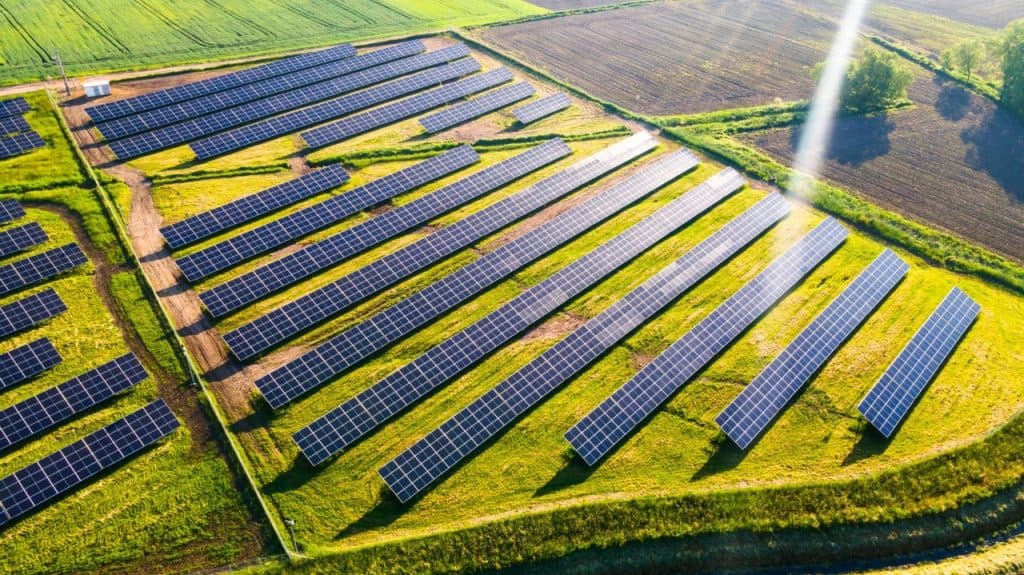
The UK has secured record levels of solar and wind capacity as part of its 2030 renewable energy strategy. Generation is accelerating rapidly, but grid infrastructure is not expanding at the same pace. Without the right engineering solutions, renewable ambition risks outstripping operational stability.

RECORD GROWTH, GROWING CONSTRAINTS

The latest Contracts for Difference auction awarded 4.9 GW of solar and 1.3 GW of onshore wind and tidal capacity, enough to power around 16 million homes.

It’s major progress. Yet as Giles Dickson, CEO of WindEurope, has warned, you cannot have more renewable electricity without more grids.

In the UK and Ireland, limited infrastructure led to an estimated 10 TWh of renewable electricity being curtailed in 2025, enough to supply one million homes for a year. Clean power was generated but could not be transmitted, resulting in financial losses and avoidable emissions.

THE VARIABILITY CHALLENGE

Wind and solar output shifts with the weather, sometimes minute by minute. These rapid changes can cause voltage fluctuations, equipment stress and curtailment if not carefully controlled.

While renewables are now cheaper than building new gas-fired stations, cost competitiveness does not guarantee system stability. Without appropriate protection and flexibility, networks face rising strain and increasing operational costs.

A GRID WITH LESS NATURAL INERTIA

As thermal power stations retire, the system is losing the inertia once provided by large rotating machines. Inverter-based renewable generation responds faster but provides less natural damping during disturbances.

This makes networks more sensitive to voltage fluctuations and fault conditions. The transition is not just about replacing generation; it requires reengineering how the grid behaves under stress.

 CONTROLLED FAULT MANAGEMENT

In inverter-dominated systems, fault currents are less predictable and influenced by control settings and asset distribution. Traditional protection schemes may not respond reliably under these new conditions.

When ground faults occur, uncontrolled current can damage transformers, cables and switchgear, potentially causing cascading failures. Protection strategies must evolve alongside renewable integration.

THE ROLE OF NEUTRAL EARTHING RESISTORS

Neutral earthing resistors (NERs) limit fault current to a safe and predetermined level. This reduces thermal and mechanical stress on equipment and allows protection systems to isolate faults quickly and effectively.

The result is fewer unexpected outages, lower repair costs and improved resilience across renewable and grid-side infrastructure.

FROM INSTALLED CAPACITY TO DEPENDABLE SUPPLY

The latest auction results are encouraging. However, long-term success depends not only on how much renewable capacity is installed, but on how reliably it operates within a changing network.

As renewable integration accelerates, collaboration between developers, network operators and specialist engineering partners will be essential to ensure clean energy growth delivers secure and stable electricity.

To find out more about strengthening renewable networks with effective resistor solutions, speak to the Cressall team.
POWER RESISTORS ARE A KEY SOLAR COMPONENT

Oxford-based solar technology firm, Oxford PV, plans to volume manufacture the world’s most efficient solar panel by the end of 2020. Solar power is currently the UK’s third largest renewable energy generator, but inefficiency challenges its growth. How can solar panel efficiency be improved to increase its supply to the grid.


Solar photovoltaic (PV) systems offer many power advantages; they’re easy and quick to install, scalable and can be deployed in a variety of locations. Solar PV systems can be installed in large solar farms, as well as residential and commercial buildings. Once installed, its fuel for generation, the sun’s energy, is free.

However, solar PV systems aren’t consistently efficient, with many hardly surpassing 20 per cent efficiency. This productivity is low compared to wind turbines, which can have efficiency of between 30 to 50 per cent. Increasing the capability of solar PV systems is essential if we’re to incorporate more solar energy into the grid.

A BRIGHT FUTURE

Solar panels made from silicon account for around 90 per cent of the market. The first practical silicon solar cells were developed in the 1950s, but now researchers are turning their attention to other materials, as silicon development is reaching its efficiency limit.

A recent area of research in solar power efficiency is perovskite technology. The sun’s energy is a solar spectrum of different electromagnetic wavelengths, which can be grouped into UV, visible and infrared light. The shorter the wavelength, the more energy it has. Perovskite is a crystal material that is able to absorb shorter wavelengths of the solar spectrum than silicon, particularly the high energy blue band of visible light.

Oxford PV are leaders in perovskite technology, claiming that their application of a thin layer of perovskite to standard silicon solar cells has the potential to increase electricity generation by a third. The resulting perovskite-on-silicon tandem solar cells can generate more power per square metre, increasing efficiency to 28 per cent.

Perovskite technology is still in the development stage, but Oxford PV are building the world’s first volume manufacturing line for perovskite-on-silicon tandem solar cells, which they hope to be fully operational by the end of the year. But while such materials innovations remain under development, there are other technologies that can help boost solar PV panel efficiency.

CHASING THE SUN

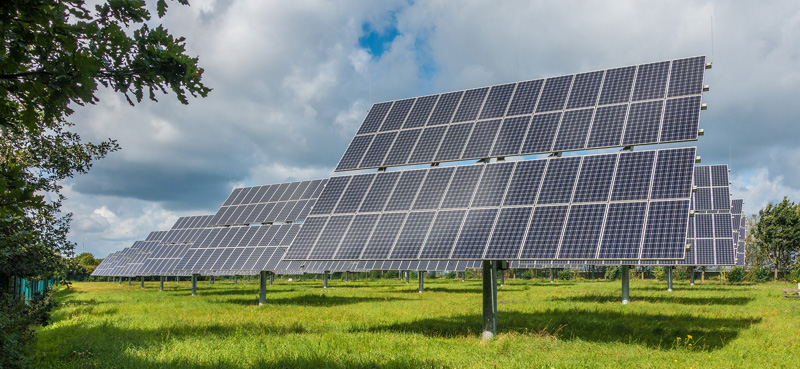
An existing method that can boost the yield of solar panels is solar tracking. Solar tracking systems move panels so that they are always directly orientated to the sun for maximum efficiency. This way, the panels generate a more consistent flow of energy, without dramatically peaking at high sunshine points such as midday or in summer.

The systems can be used in ground-mounted solar panels, such as solar farms for large-scale commercial or utility projects. The movements can be controlled by a pre-programmed path based on astronomic predictions, or they can use solar radiation sensors to detect and react to the sun’s live position. The tracking system can be single axis or dual axis.

Single axis systems move the panels through only one plane, usually from north to south to track the sun rise and set. Dual axis systems can move in this direction, but also in another plane, making them bidirectional. This allows the solar panels to also be tilted from east to west to account for seasonal variations in the sun’s angle relative to the panel’s position on Earth.

Solar trackers can increase average solar panel power output by up to 35 per cent, and efficiency can be maximised by incorporating a dynamic braking resistor.

Tracking systems use electric motors to alter their position. Here, braking resistors can ensure that the panels stop moving when required by dissipating excess voltage generated by the decelerating motor. This ensures the panel doesn’t overshoot its movement and land in a sub-optimal orientation to the sun.

RESISTING OVERLOAD

Maintaining solar panels’ condition also plays a vital role in their efficiency. Here, resistors can also be used when installing solar panels or disconnecting them for maintenance. Regardless of whether solar panels are connected to the grid, they continue to generate electricity. Here, dummy load resistors can dissipate excess generated energy into the environment as heat to prevent the solar panel from becoming overloaded. Damage from overloading can lower the running efficiency of the solar PV system.

Cressall has over 100 years’ experience in electrical engineering, and supplies solutions to the solar power industry. Our wide range of high power dummy load banks are suitable for solar PV systems and can meet low noise requirements. We also supply dynamic braking systems for tracking systems to accurately orientate solar PV panels to the sun, and put any wasted braking energy back into the system to maximise efficiency.

Oxford PV’s perovskite technology promises to significantly increase the efficiency of solar PV panels, and may be widely available as soon as next year. In the meantime, and to support future innovations, solar tracking systems, along with dynamic braking systems and dummy load bank resistors, can improve solar panel efficiency — helping to incorporate more renewable solar energy into the grid.

CRE428