DIVING INTO MARINE RESISTOR DESIGN
DESIGN CONSIDERATIONS FOR OFFSHORE ELECTRICAL COMPONENTS
Covering over 70 per cent of the Earth’s surface, the oceans are a vital element of our planet’s ecosystem. However, for the millions of vessels that cross them, the aquatic environment can present a problem. Vessels are increasingly using electrical systems to power across oceans, but a component’s design must account for these extreme conditions.
Whether for main propulsion propellors, crane or lifting systems, or cable laying, electrical drives can be found at the heart of many marine operations, offering increased control, reliability and mechanical simplicity. Dynamic braking resistors (DBRs) are an essential part of an electric drive system that remove excess energy from the system when braking to either dissipate as heat if system is not receptive to regeneration or if system is receptive, but energy level goes beyond the system limits, so needs to be removed.
When designing electrical components for offshore applications, material selection is key from the start of the process to guarantee that equipment will perform under harsh conditions, including saline atmosphere, high wind loadings and corrosive sea water.
Engineers tasked with designing resistors for marine applications must consider material choice, structural stability and cooling method.
CORROSION-RESISTANT MATERIALS
Sea water and the saline atmosphere is corrosive, which could leave equipment inoperable. Due to this, stainless steel, combined with special paint systems, is typically used for the enclosure metalwork for resistor elements. With materials containing at least 10.5 per cent chromium, stainless steel reacts with oxygen in the air to produce a protective layer on its surface to prevent corrosion if not painted.
There are many grades of stainless steel that can offer high corrosion resistance, which can be further enhanced by the addition of extra elements. For below-deck applications, 316 and 304 stainless steel contain nickel to broaden the protective layer created by the chromium, and can be used in unpainted condition.
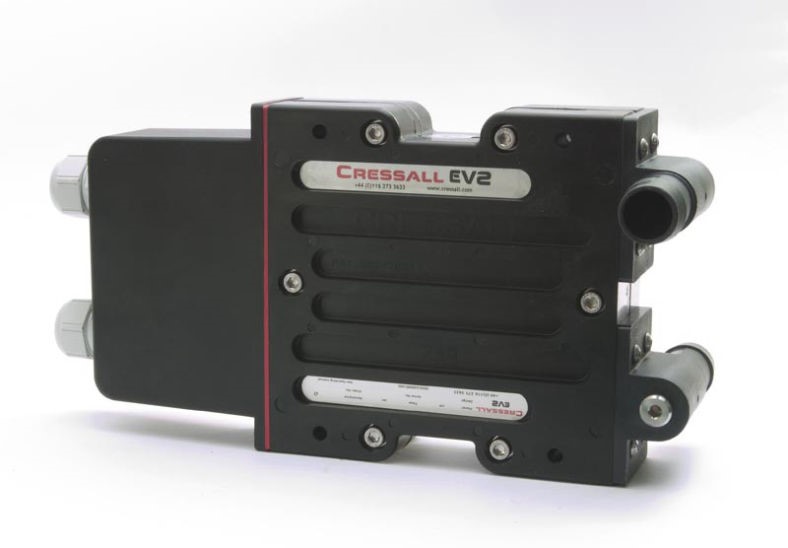
However, for above-deck components, 316 stainless steel has a higher nickel quantity and added molybdenum, so the resistor unit’s metalwork receives optimum protection against the marine atmosphere, but in some conditions, painting will also be required. Cressall’s resistor enclosures for the EV2 resistor terminal cover boast at least an IP56 ingress protection rating, certifying that sea water cannot enter the unit to cause harm.
In addition to the exterior, it is important that the resistor’s element can withstand the harsh conditions. For these applications, Alloy 825 sheathed mineral-insulated elements are less vulnerable to atmospheric corrosion. As the element in encased within the mineral insulated sheathing, the sheath is at earth potential, so if water or high humidity is present this will prevent accidental contact with the live element, making them a much safer choice for marine applications.
STRUCTURAL STABILITY
Weather at sea is unpredictable, so vessels must be able to withstand the large variance in wind and harsh sea conditions found worldwide. Many offshore structures such as wind turbines are located in areas with high winds, so if the system requires resistors to help provide stability to their electrical components these considerations must be considered within a resistor’s design.
Considering the impact of a vessel’s rotational motions — its side-to-side motion, or pitch, and its front-to-back motion, or roll, is crucial. Design engineers need to ensure that there is enough mechanical support in the structure to stabilise the resistors for safe operation when it is subjected to these forces.
Cressall can conduct finite element analysis (FEA) to help ensure structural stability. FEA allows design engineers to predict a product’s performance in the real world, then see the impact of forces and make changes accordingly. This ensures the resistor performs well in the potentially extreme weather conditions.
It’s also important to consider the size constraints of marine applications. In contrast to onshore units, offshore electrical components must fit into a compact area, so the size of the unit’s support structures must be minimised without compromising durability.
COOLING METHOD
An essential part of a resistor is its cooling system. Since the resistor dissipates excess energy as heat, the cooling system is responsible for cooling the resistor element to ensure continued operation. Depending on the layout and resources of the system, resistors can be naturally or forced air or water-cooled.
Air-cooled resistors come in two types — forced and naturally cooled systems. Forced cooling systems use a fan to dissipate heat in a compact space. These units are suitable for deck mounting and can be secured using anti-vibration mounts. Natural cooling is the most common in marine applications, offering a higher power rating and can be mounted in machinery spaces, protected environments or on deck. For machinery spaces or protected areas, consideration should be given to how the hot air released from the resistors should be evacuated to ensure other equipment mounted locally does not overheat.
Alternatively, the cooling system can use the vessel’s chilled water system, which circulates cool water for air conditioning and equipment cooling. If the chilled system uses sea water, titanium-sheathed elements with super duplex steel metalwork can be incorporated, for continuous use in acidic, tropical sea water and downgraded to 316 stainless steel for freshwater systems.
The ocean is a valuable asset for energy, transport and trade. Ongoing development of electric drives for marine applications can be challenging, but taking these conditions and energy savings into account makes them a viable and advantageous option for powering vessel and for use in offshore structures.
CR470