
Electrical resilience in data centres
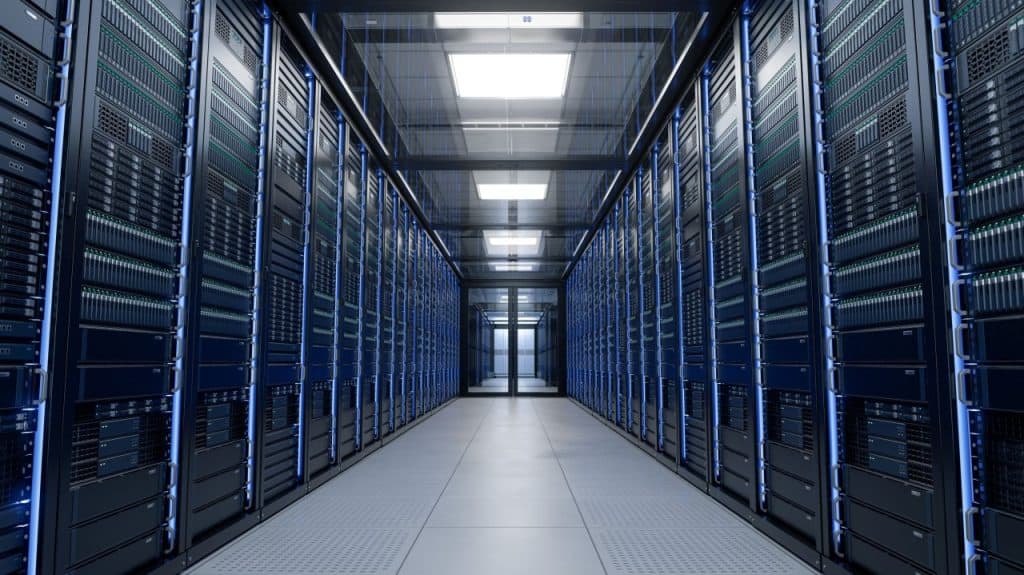
Data centres are the backbone of the digital economy, supporting cloud computing, AI and global communications. As demand accelerates, so does the need for uninterrupted operation. Yet power remains the leading cause of major outages, making electrical resilience a critical design priority rather than an optional extra.
THE GROWING RESILIENCE CHALLENGE
According to the Uptime Institute’s 2025 Annual Outage Analysis, power-related issues remain the leading cause of significant data centre outages, highlighting the limits of redundancy alone.
At the same time, data centre electricity demand is rising sharply. The International Energy Agency estimates global demand could exceed 1,000 TWh by 2030, driven by AI and digital services. As electrical loads increase, systems are pushed closer to operational limits, making stability during abnormal conditions more important than ever.
WHY FAULT BEHAVIOUR MATTERS
Electrical faults can cause rapid changes in current and voltage that stress equipment and protection systems. In high-uptime environments, even brief disturbances can trigger unnecessary trips or disrupt sensitive loads.
This challenge is increasing with the adoption of inverter-based technologies and complex distribution architectures. These systems can reduce available fault current or alter fault behaviour, making protection coordination more difficult. Without controlled fault current, systems risk either overreacting or failing to detect faults reliably.
MANAGING FAULT CURRENT FOR STABILITY
Resilient data centre design depends on controlling fault current to reduce stress on transformers, switchgear and cabling while ensuring predictable protection response.
Neutral earthing resistors (NERs) provide a proven method of achieving this in earth fault conditions. By introducing a defined resistance between system neutral and earth, they limit fault current to a safe, predictable level while maintaining system stability.
In high-resistance grounded systems, the first earth fault can often be treated as an alarm condition, allowing operators to address issues without immediate shutdown. This supports higher uptime and improved operational continuity.
For effective performance, NERs must be engineered around real operating conditions, including system voltage, fault levels, thermal duty and installation constraints such as footprint, cooling and compliance requirements.
SUPPORTING SEAMLESS POWER TRANSFER
Transitions between grid, UPS and standby generation are some of the most sensitive moments in a data centre electrical system. Poorly controlled fault behaviour during switching can lead to voltage fluctuations or protection miscoordination.
By stabilising fault current levels and maintaining a consistent system reference, well-designed earthing strategies help reduce nuisance tripping and support smoother transitions between power sources.
TOWARDS RESILIENT ELECTRICAL ARCHITECTURE
As data centres scale, resilience is increasingly defined by how systems behave under fault and switching conditions, not just redundancy levels.
Controlled fault current strategies are becoming a core part of modern electrical design, helping reduce system stress, improve protection performance and support continuous operation.
For operators and designers, resilience is no longer something added after design, but it must be engineered in from the outset.
Data centres are now critical national infrastructure, and uninterrupted operation is essential. By integrating controlled fault current strategies and technologies such as NERs, engineers can improve stability, reduce disruption risk and support long-term operational reliability.
To learn more about supporting resilient data centre design, speak to the Cressall team.